

A poisonous legacy buried under Yellowknife, and the mine film by France Benoit that forced Canadians to reckon with it.
Giant Mine at a Glance
| Fact | Figure |
|---|---|
| Years of operation | 1948 – 2004 (55 years) |
| Gold produced | 7 million ounces |
| Private profits (2002 dollars) | $1.1 billion |
| Government taxes and royalties | $572 million |
| Government subsidies paid to mine | $59 million |
| Arsenic trioxide stored underground | 237,000 tonnes (water-soluble dust) |
| Volume equivalent | Seven and a half ten-storey buildings |
| Contaminated soils on site | 11,500,000 cubic feet |
| Site area | 950 hectares – 8 open pits, 4 tailing ponds, 100 buildings |
| Short-term remediation cost estimate | $903 million (federal liability) |
| Final private owner | Royal Oak Mines (went into receivership, 1999) |
What Is Giant Mine? A Short History
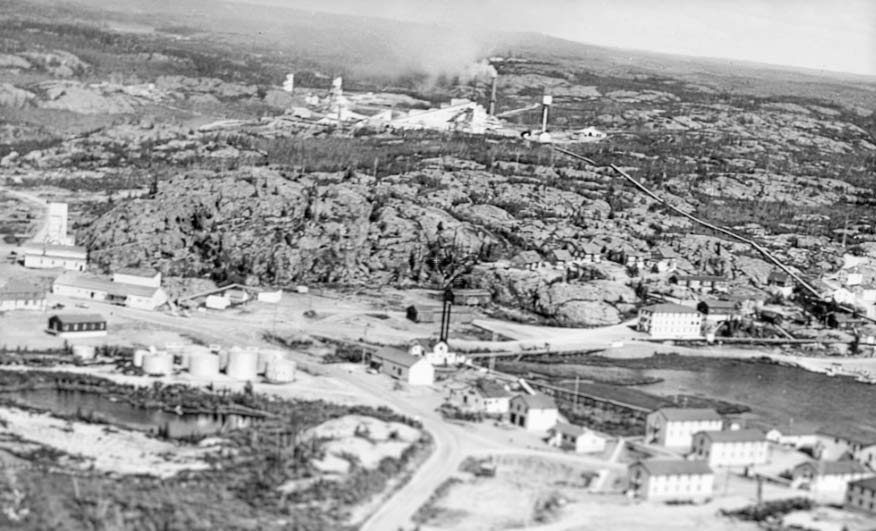
Giant Mine was established in 1948 on the traditional territory of the Yellowknives Dene First Nation, without the consent of the community whose lands it occupied. Located just north of Yellowknife city centre, the mine quickly became central to the region’s economy and, as one account puts it, was part of the founding infrastructure of what is now the NWT capital. It can still be seen on the outskirts of town today.
The gold extraction process used at Giant Mine involved roasting arsenic-bearing ore at high temperatures. This created arsenic trioxide, a deadly water-soluble powder, as a byproduct. In the mine’s earliest years, this powder was not captured at all but discharged directly up the smokestack, dispersing into the surrounding environment. Archival records confirm the death of a child in the early 1950s as a direct result of this contamination.
The mine changed corporate hands over its lifetime, moving from Falconbridge to Pamour of Australia and finally to Royal Oak Mines, which went into receivership in 1999. Each transfer of ownership also transferred the growing liability of the arsenic stockpile. When Royal Oak went bankrupt, responsibility for the site passed to the federal government, specifically, what is now Crown-Indigenous Relations and Northern Affairs Canada.
The Arsenic Trioxide Crisis: 237,000 Tonnes Underground
⚠️ Permanent Toxicity – This Is Not a Conventional Cleanup
Arsenic trioxide does not degrade into a safe substance over time. There is no natural process (chemical, biological, or geological) that will render it harmless. The Giant Mine remediation is not a cleanup in the conventional sense: it is an indefinite containment programme that must continue forever.
The Giant Mine Yellowknife arsenic contamination problem began in the mine’s earliest years, when the roasting process released arsenic trioxide directly up the smokestack without adequate capture. Elevated arsenic levels were subsequently detected in the blood of children living in the adjacent Dene communities of N’Dilo and Dettah – a documented health impact confirmed by archival records as far back as the early 1950s.
The 237,000 tonnes of arsenic trioxide currently stored in underground chambers represent one of the largest concentrations of this substance anywhere on Earth. Crucially, the mining process transformed the arsenic from its original inert geological state into a water-soluble dust, meaning any breach of containment would allow it to migrate directly into groundwater.
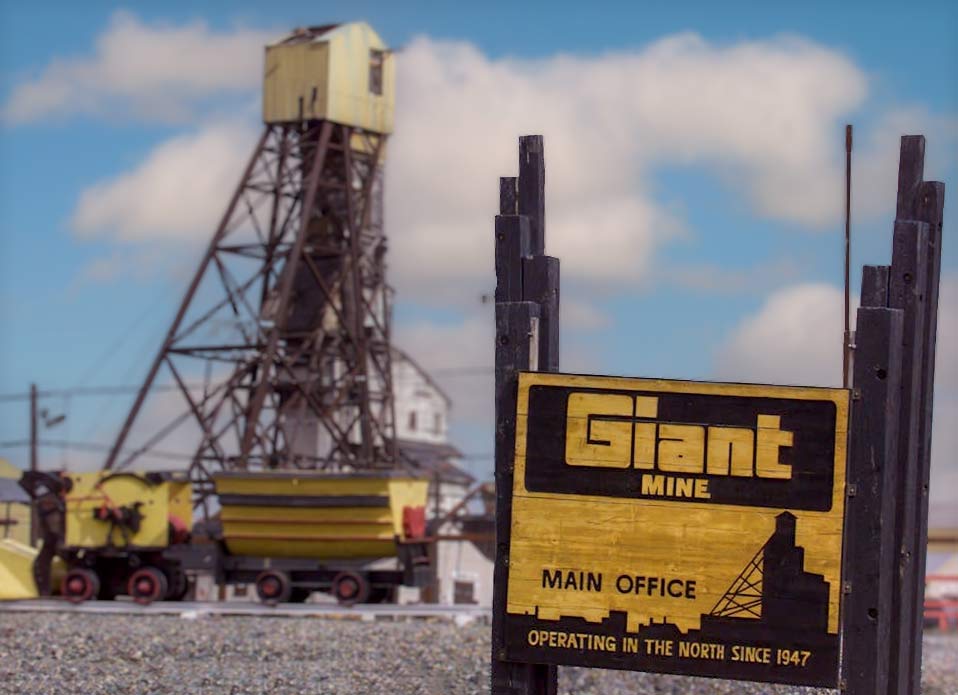
Arsenic trioxide is acutely toxic at extremely low concentrations. It is classified as a Group 1 human carcinogen by the International Agency for Research on Cancer (IARC), associated with skin lesions, cardiovascular disease, peripheral neuropathy, and cancers of the bladder, lung, and kidney.
Mary Rose Sundberg, a Yellowknives Dene community leader whose parents both worked at the mine, makes this legacy visible in the documentary film. Standing outside the mine gate, she recalls that the area was once, according to elders, a blueberry patch as far as the eye could see. Those blueberries are long gone.
Canada’s $903 Million Remediation Plan
Following years of environmental assessment and extensive community consultation, the federal government approved the Giant Mine Remediation Project (GMRP). The central strategy is the Frozen Block Method: an industrial thermosyphon refrigeration system that freezes the rock surrounding the arsenic trioxide chambers, keeping the contaminant sealed in stable, isolated blocks indefinitely.
The $903 million figure covers the short-term cost of construction, infrastructure, water treatment systems, and early operations. It does not represent the full long-term liability, which has no defined endpoint. The environmental assessment mandates a formal review of the plan every 100 years – a requirement that acknowledges, implicitly, that this problem will outlast every institution involved in creating it.
Key Elements of the Remediation Plan
- Thermosyphon freeze system to permanently seal arsenic trioxide chambers
- Treatment and management of contaminated water on-site
- Demolition and remediation of surface structures (100+ buildings, 8 open pits, 4 tailing ponds)
- Revegetation and ecological restoration of affected land
- Establishment of an independent oversight body with Dene First Nation representation
- A perpetual care plan with mandatory 100-year review cycles
- Ongoing research into more permanent containment or treatment solutions.
Former Chief Fred Sangris of the Yellowknives Dene First Nations (N’Dilo), a land claim negotiator and cultural historian, accompanied researchers into the mine to inspect the test refrigeration units. He expressed relief when the pilot system worked as promised, but made clear his anxiety would not ease until the full system is operational and the community’s long-term safety is genuinely secured.
The Yellowknives Dene First Nation: Land, Language, and Loss
The Yellowknives Dene have inhabited the lands around what is now Yellowknife for centuries. Their communities of N’Dilo and Dettah sit directly adjacent to the Giant Mine site. The mine was constructed in 1948 on traditional Dene hunting and harvesting grounds – territory covered by Treaty 8, signed in 1921, which affirmed Indigenous rights to continue living off the land.
The construction of the mine without meaningful consent, the subsequent arsenic contamination of traditional lands, and the documented health impacts on community members represent a concrete, quantifiable pattern of environmental injustice. The community lost access to hunting grounds, fishing areas, and culturally significant sites. The land itself was transformed.
Mary Rose Sundberg, the great-granddaughter of Chief Drygeese, who signed Treaty 8 in 1921, and whose own parents worked at Giant Mine, is a central voice in the documentary. She now directs the Goyatiko Language Society in Dettah, working to preserve and transmit the Weledeh language to younger generations. This work is more than cultural. It is directly connected to the Giant Mine story. As the film explores, the community’s ability to convey the meaning and danger of the contaminated site to future generations depends in part on the survival of their language and oral traditions.
Guardians of Eternity: Review of the Documentary
The Guardians of Eternity – Confronting Giant Mine’s Toxic Legacy is a 45-minute documentary directed by France Benoit, a Yellowknife-based filmmaker and former policy advisor who has lived in the city for more than 25 years. This guardians film was produced by Shebafilms in collaboration with the Toxic Legacies Project – a partnership between researchers at Memorial University of Newfoundland, Lakehead University, the Goyatiko Language Society, and the community advocacy group Alternatives North. Funding came from the Social Sciences and Humanities Research Council of Canada (SSHRC).
“In essence, we are all guardians of eternity at Giant Mine. This is our destiny in many ways.”
France Benoit, Director, Guardians of Eternity
The title of the film is not metaphorical. It refers to the literal, ongoing obligation to monitor, maintain, and communicate the danger of a substance that will remain toxic long after every person alive today has died.
What the Film Covers
- The history of Giant Mine’s operation, corporate transfers, and the regulatory failures that allowed contamination to accumulate
- The arsenic trioxide problem: how it was created, why it cannot be neutralised, and the Frozen Block Method as the current response
- Testimonies from Yellowknives Dene community members, including descendants of Treaty 8 signatories
- Perspectives from historians and geographers involved in the Toxic Legacies research project
- The challenge of communicating a permanent hazard to people thousands of years in the future.
Jim Clifford, a historian at the University of Saskatchewan who used the film in his Environmental Disasters in History course, noted that it is particularly effective when it follows Fred Sangris into the mine itself. The film is, in Clifford’s assessment, at its best in these moments of direct experience, when the abstract scale of the problem becomes immediate and personal.
Jamie Kneen of MiningWatch Canada called the film “a fresh, engaging, and honest look at some of the most profound questions of environmental justice of our time”, arguing that it exposes a pattern too rarely named: industrial development leaves Indigenous communities not just with environmental damage, but with permanent, ongoing responsibility for a deadly legacy they did not create.
Festival Recognition and Reach
Since its release in October 2015, this guardians film has been screened for more than 1,100 viewers at hosted events and has received international recognition. It is available with French and Spanish subtitles.
| Festival / Recognition | Detail |
|---|---|
| Mexico International Film Festival | Golden Palm winner |
| Elements International Environmental Film Festival | Official selection |
| Marda Loop Justice Film Festival | Featured screening |
| ARI Northern Character Film & TV Festival | Official selection |
| Women’s Voices Now | Official selection |
| Ethnografilm | Official selection |
| Bay Street Film Festival | Official selection |
| Near Nazareth Festival, Afula, Israel | Official selection |
| Canadian Dimension magazine | Listed among 10 best documentaries of 2016 |
| Canadian Assoc. of Geographers (2016) | Featured at John Wiley Lecture |
| Network in Canadian History & Environment | Positively reviewed in The Otter |
This Canadian mine film is now freely available to stream online via Vimeo, and continues to be used extensively in university and high school classrooms across Canada.
Reception in the Classroom
History professor Jim Clifford (University of Saskatchewan) screened the film in his first-year Environmental Disasters in History course alongside a session on Bhopal, finding that it provided a stark contrast between a short-term industrial disaster and a genuinely permanent one. Two of his students captured its impact:
Kale Yuzik, a first-year student at the University of Saskatchewan, said the film forced him to ask questions he had never thought to ask before: “Why are these national issues not taught in grade schools across the country?” The cleanup costs, he pointed out, fall on every Canadian taxpayer, making this “a lesson we should all learn from.”
Sydney Sperrer, another first-year student in the same class, described feeling both angry and grief-stricken, not just at the scale of contamination, but at how little most Canadians know it exists. What struck her most was the decades of inaction: a mine allowed to poison the land year after year, on Indigenous territory, largely out of the national conversation.
How Do You Warn Future Generations? The ‘Zombie Mine’ Problem
Perhaps the most philosophically distinctive aspect of the Giant Mine story, and the question the documentary returns to most insistently, is this: how do you warn people 300, 500, or 10,000 years from now about a buried hazard, when languages change, governments fall, maps get redrawn, and institutions disappear?
Researchers Arn Keeling and John Sandlos have written about this as the ‘zombie mine’ problem – contaminated sites that continue to pose risks long after the economic activity that created them has ceased. Giant Mine is an extreme case because the hazard is not merely long-lasting but permanent. It cannot be neutralised, only contained. And that containment requires continuous human action.
Nuclear waste storage sites have explored physical monuments designed to convey danger without relying on language – a problem that has generated serious scholarly and artistic debate. The Toxic Legacies project team, led by Keeling and Sandlos in collaboration with Sundberg and other Yellowknives Dene members, is investigating whether oral traditions and embedded cultural knowledge could serve as an additional, perhaps more durable, means of transmitting awareness of the danger across generations.
Context: Abandoned Mines in Canada
Giant Mine is one of approximately 10,000 documented contaminated sites on federal lands in Canada, according to the Federal Contaminated Sites Inventory. While it is among the most severe in terms of toxicity and remediation cost, the broader challenge of managing legacy mine sites is a national policy issue. The Giant Mine Remediation Project is widely cited as a case study for both cautionary lessons and emerging best practices in contaminated-site governance.
Where Things Stand in 2026
As of early 2026, the Giant Mine Remediation Project remains active and on a multi-decade construction timeline. Key infrastructure work, including the installation of thermosyphon freeze pipes and water treatment systems, has been underway for several years. The Giant Mine Oversight Board, which includes formal representation from the Yellowknives Dene First Nation, the Government of the Northwest Territories, and federal authorities, continues to publish regular progress updates.
The 100-year review mechanism built into the environmental assessment is intended to ensure that the remediation approach is reassessed in light of future technological and scientific developments. What remains unresolved is the question of who will fund and administer the site centuries or millennia from now, when every institution involved in creating and managing it may no longer exist in its current form. This is not a theoretical concern. It is the central unresolved challenge of the Giant Mine legacy.
The documentary Guardians of Eternity frames this not as a failure of one mine or one company, but as a question every generation of Canadians now inherits.
Frequently Asked Questions
What is the Giant Mine documentary about?
Guardians of Eternity examines the toxic legacy of the Giant Mine in Yellowknife, NWT, focusing on 237,000 tonnes of arsenic trioxide left underground, the federal remediation plan, the impact on the Yellowknives Dene First Nation, and the challenge of warning future generations about a permanent hazard.
How much arsenic is at Giant Mine?
The site holds approximately 237,000 tonnes of arsenic trioxide stored in underground chambers – equivalent in volume to seven and a half ten-storey buildings. Unlike the arsenic’s original geological form, this material is water-soluble and would migrate into groundwater if containment were breached.
What is the Frozen Block Method?
The Frozen Block Method is the primary remediation strategy approved for Giant Mine. Industrial thermosyphon systems freeze the rock surrounding the arsenic trioxide chambers, isolating the contaminant indefinitely. The approach does not destroy or neutralise the arsenic. It is a stabilisation plan, not a cleanup, and requires continuous maintenance with no defined end date.
How much will the Giant Mine cleanup cost?
The federal government’s short-term cost estimate is approximately $903 million. This covers construction, infrastructure, water treatment, and early operations. It does not capture the full long-term liability, which includes perpetual monitoring and maintenance.
Who is responsible for cleaning up Giant Mine?
Crown-Indigenous Relations and Northern Affairs Canada holds federal responsibility for the Giant Mine Remediation Project. Oversight is provided by the Giant Mine Oversight Board, which includes representation from the Yellowknives Dene First Nation, the Government of the Northwest Territories, and federal authorities.
What is the Yellowknives Dene First Nation’s connection to Giant Mine?
The Yellowknives Dene have lived on the surrounding land for centuries. The mine was built in 1948 on their traditional territory without community consent – land subject to Treaty 8 (1921). Community members experienced documented health impacts from arsenic contamination in the mine’s early decades, and the Dene continue to participate in remediation oversight through formal governance structures.
Is arsenic trioxide toxic forever?
Yes. Arsenic trioxide does not degrade into a safer substance over time. It remains toxic to all life indefinitely. This is why the Giant Mine Remediation Project is built around permanent containment rather than conventional remediation, and why the environmental assessment mandates a review every 100 years.
Where can I watch Guardians of Eternity?
The documentary is freely available to stream online via Vimeo (search ‘Guardians of Eternity Shebafilms’). DVD copies with French and Spanish subtitle options are also available. The film comes with classroom discussion guides and a curated reading list for educational use.